Mazza Center for Implant and Aesthetic Dentistry provides dental implants in Potomac, MD, for patients who want care their neighbors recommend. Our Bethesda office welcomes Potomac residents and neighbors from nearby towns. Dr. David Mazza leads implant care, and our oral care services cover single teeth and full arches. Our team reviews your oral health, goals, and timeline before treatment begins. You get clear answers and steady communication at every visit.
Dental Implants in Potomac MD

Meet Dr. David Mazza
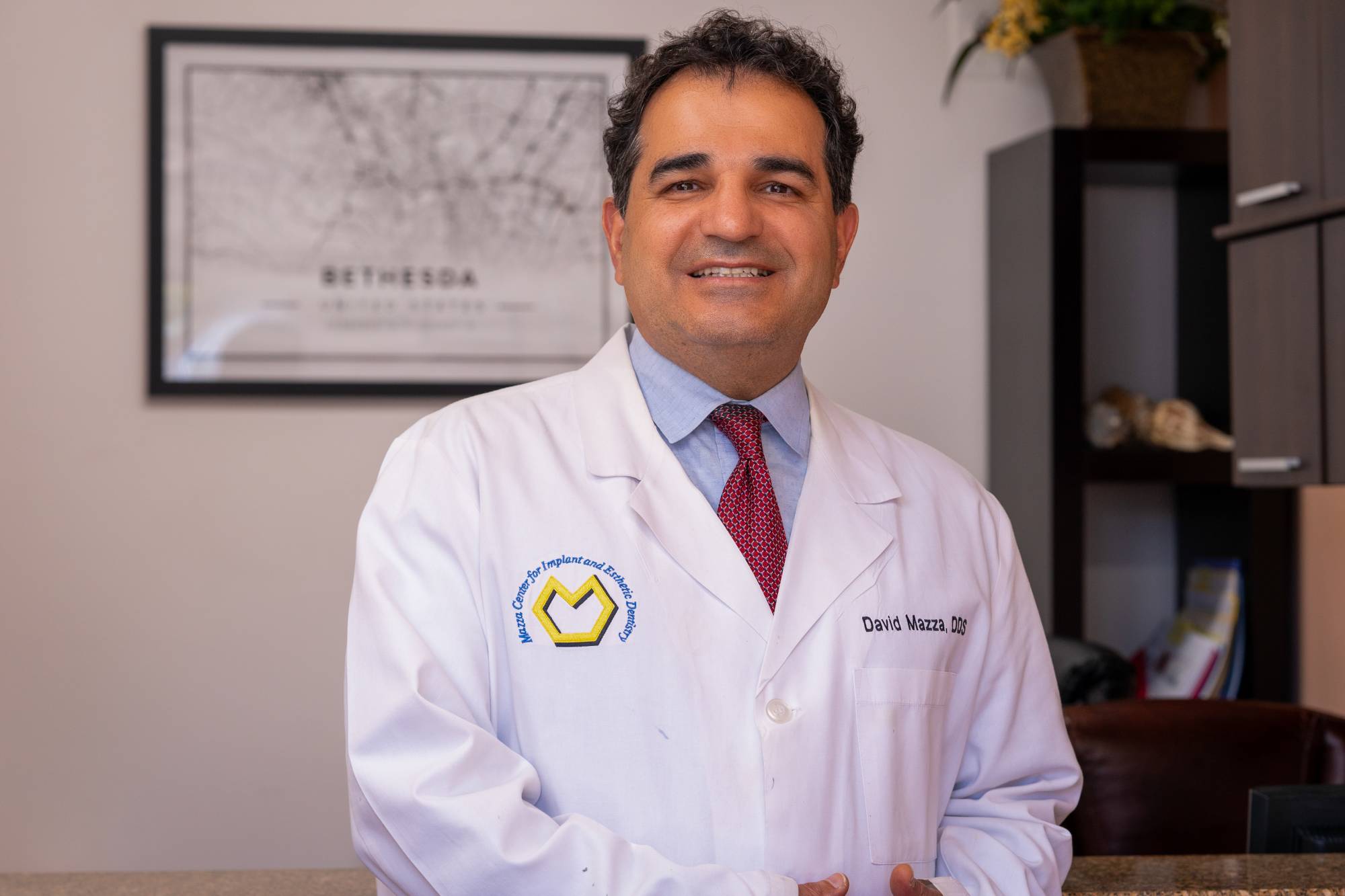
Dr. David Mazza leads implant and cosmetic care at Mazza Center for Implant and Aesthetic Dentistry. He has practiced for more than 28 years. Dr. Mazza is a board-certified Diplomate of the International Congress of Oral Implantologists (ICOI). He is also a board-certified Diplomate of the American Board of Aesthetic Dentistry (ABAD). Since 2000, he has taught at the University of Maryland School of Dentistry. He has served there as Clinical Assistant Professor and Dean’s faculty member for more than 25 years. He is an associate member of the American Academy of Esthetic Dentistry, an invitation-only organization. Dr. Mazza is also a Fellow Member of the American Society for Dental Aesthetics.
Are you experiencing the consequences of missing teeth?
Is a dental implant right for you?
Tooth loss changes how you chew, speak, and smile. It also affects your gum health and jaw over time. Honest answers about your health and goals show whether an implant fits.

Types of Dental Implant Solutions We Offer
- Single-Tooth Dental Implants
- All-On-X Full Arch Implant Restoration
- Implant Overdenture
- Implant-Supported Bridge
Single-Tooth Dental Implants
A single-tooth implant replaces one missing tooth and leaves the teeth beside it alone. Dr. Mazza sets one titanium post in the jawbone, where it serves as the new root.
Your finished restoration offers three benefits:
- A dental crown that matches your smile
- Healthy neighbor teeth that keep their enamel
- Jawbone growth around the post
Opposing Perspectives on Single-Tooth Dental Implants
Single-tooth implants are the usual standard for one missing tooth. Placement needs enough bone, and some patients need bone grafting first. The timeline also spans several months. A review of single crowns on implants found high survival at five years.
All-On-X Full Arch Implant Restoration
All-On-X replaces a full arch of teeth with prosthetic teeth that stay fixed in place. Four or more implants anchor the restoration, and we offer it as a specialty service. Dr. Mazza’s training in implant dentistry and aesthetic dentistry guides each plan.
You can expect three benefits:
- A stable bite for everyday chewing
- A natural-looking smile across the arch
- Easier eating than a conventional denture
Opposing Perspectives on All-On-X Full Arch Implant Restoration
All-On-X delivers strong function and high satisfaction, mostly for patients who struggled with loose dentures. The upfront investment is significant, and any later change needs a clinical procedure. You also need enough bone at the implant sites. A systematic review calls four-implant restoration predictable for atrophic jaws in patients who avoid regenerative procedures.
Implant Overdenture
An implant overdenture is a removable denture that clips onto two or more implants. Those implants keep it from sliding when you chew or talk.
This option offers three features:
- Bone stimulation that a standard denture cannot provide
- More stability than a conventional denture
- A choice that is more accessible in cost than a fixed full arch restoration
Opposing Perspectives on Implant Overdenture
Implant overdentures feel steadier than conventional dentures, and patients rate them higher. You remove the denture for cleaning, and its attachments may need adjustments as they wear. The bone benefit is smaller than with a fixed restoration. A systematic review found two-implant lower overdentures satisfied edentulous patients more than complete dentures.
Implant-Supported Bridge
An implant-supported bridge replaces two or more neighboring missing teeth. Two implants anchor each end, and prosthetic teeth fill the space between them.
Compared with a traditional bridge, this option offers:
- Healthy neighbor teeth that keep their natural shape
- A stable foundation that supports the bone under the gap
- Fewer implants than replacing every tooth separately
Opposing Perspectives on Implant-Supported Bridges
Implant-supported bridges work well for several adjacent missing teeth. If one supporting implant fails, the whole bridge loses support, so careful bone evaluation matters. Good dental hygiene protects the implants and bridge for years. Patient safety guides how Dr. Mazza evaluates each site. A systematic review found some complications in patients with implant-supported prostheses over five years.
Alternative Treatments: What happens if you do nothing?

FAQs
What happens if a dental implant fails?
Implant failure is uncommon, and published success rate figures are high for most patients. Failure can happen early, before the post fuses with the bone, or later because of infection or heavy bite forces. Watch for looseness, swelling, pain, or bleeding, and call your dentist right away. A failed implant can usually be removed, and the site often heals well. After a healing period, your dentist may place a new implant, sometimes after bone grafting.
Will my dental implant look and feel like a natural tooth?
Yes. Your dental crown matches the color, shape, and size of your neighboring teeth, so it blends into your smile. The post sits in your jawbone like a natural root, so the tooth feels steady when you chew and speak. Most patients adjust within a short period after the final crown goes on. Care for it with the same brushing and flossing you use on natural teeth.
Can I get dental implants if I have bone loss?
Some bone loss still allows implants, though it changes your plan. A graft can rebuild bone volume before placement, and your own healing speed sets the timeline. During that period, jaw bone growth fills in the grafted area. Detailed imaging lets Dr. Mazza measure your bone and decide whether you need grafting. Many patients who fear they cannot qualify find a workable path with the right preparation.
Can gum disease affect my dental implant?
Yes. Gum disease around an implant is called peri-implantitis, and it can damage the bone that holds the post. Healthy gums before surgery lower your risk, so we treat existing gum disease first. After placement, daily dental hygiene protects your gum health. Brush twice a day, clean between your teeth, and keep your checkup schedule. Tell your dentist about bleeding, swelling, or gums that have receded around the implant.
What should I ask at my first dental implant consultation?
Bring a short list of patient questions so your first visit moves faster. Good topics include your bone health, how many visits your plan needs, and how long each healing period lasts. Ask whether you need bone grafting and which type of implant fits your goals. Comfort matters too, so raise sedation dentistry options if dental visits make you nervous. Patient safety guides every plan, so mention your medications and health conditions.